DELIVERY CASE · PETROCHEMICAL VESSEL CLADDING · 2026
Wuxi Zhongyue Petrochemical Automates Strip Cladding of Large-Area Corrosion-Resistant Layers on Tubesheets and Heads
haibao robot delivered an automated submerged-arc strip cladding cell to Wuxi Zhongyue Petrochemical Equipment Co., Ltd., a manufacturer of petrochemical pressure vessels. A wide strip electrode lays down a broad bead in a single pass for large-area corrosion-resistant overlays on tubesheets and head inner surfaces — with lower dilution, higher deposition per pass and fewer bead overlaps, reducing the risk of RT/UT repairs.
☎ Call +86 177 5158 3908 Send drawings for a cladding proposal →
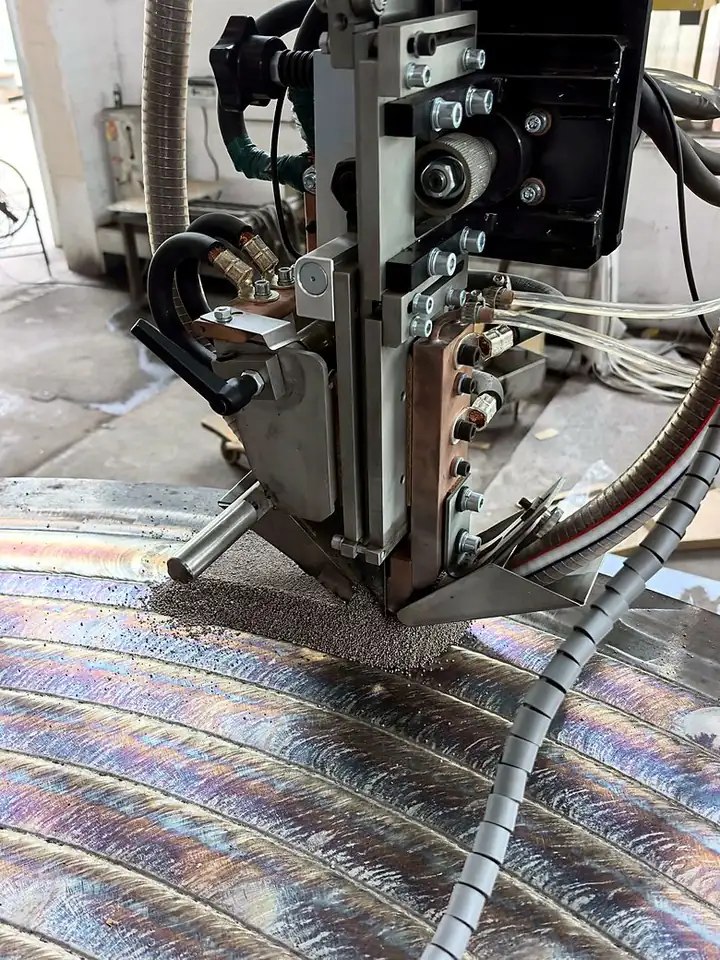 On-site photo
StripSAWWide strip electrode
vs. conventional wire cladding
WidebeadsHigh deposition per pass
for large-area overlay
LowdilutionMore stable chemistry
in the CRA layer
RT/UTFewer overlaps,
lower repair risk
On Site
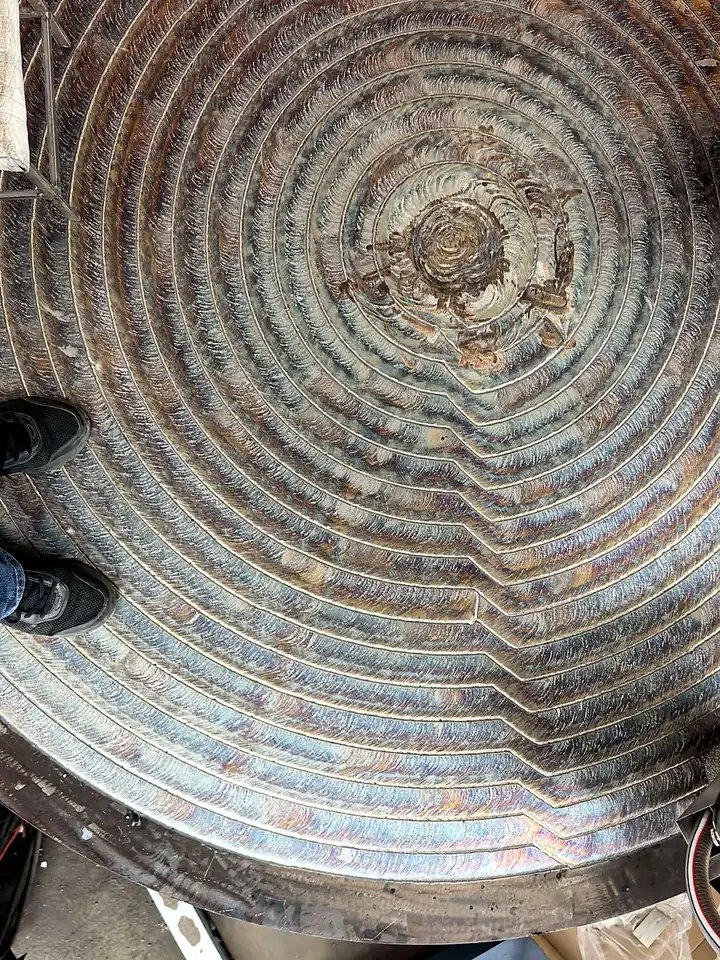
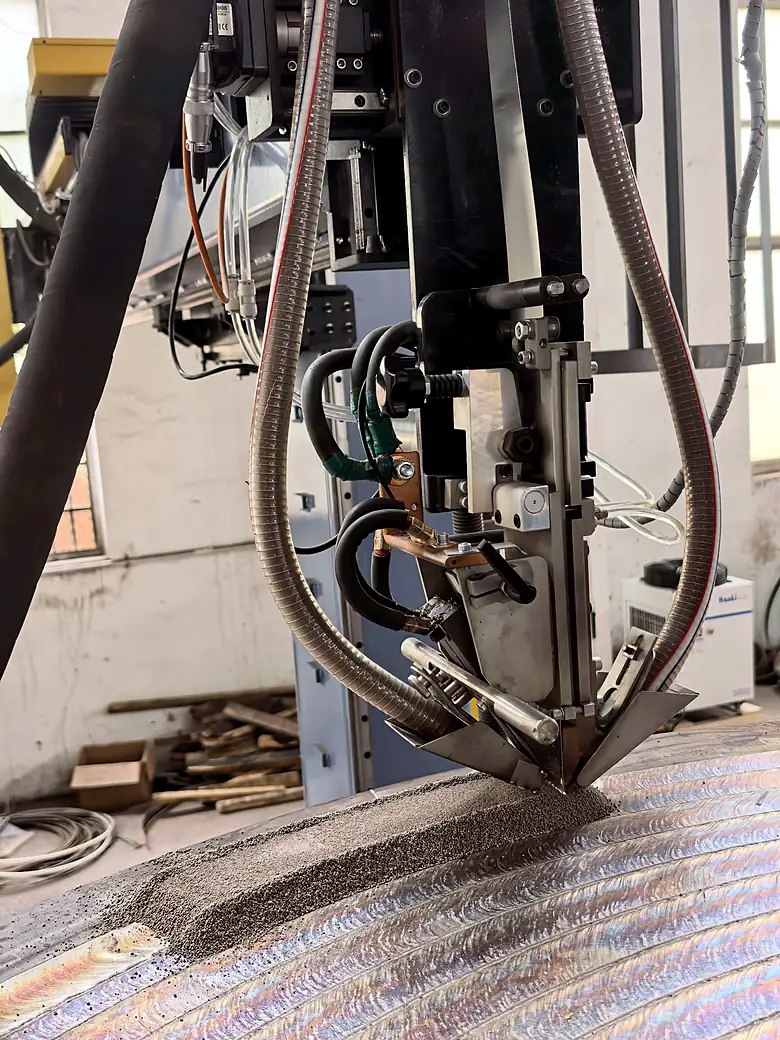
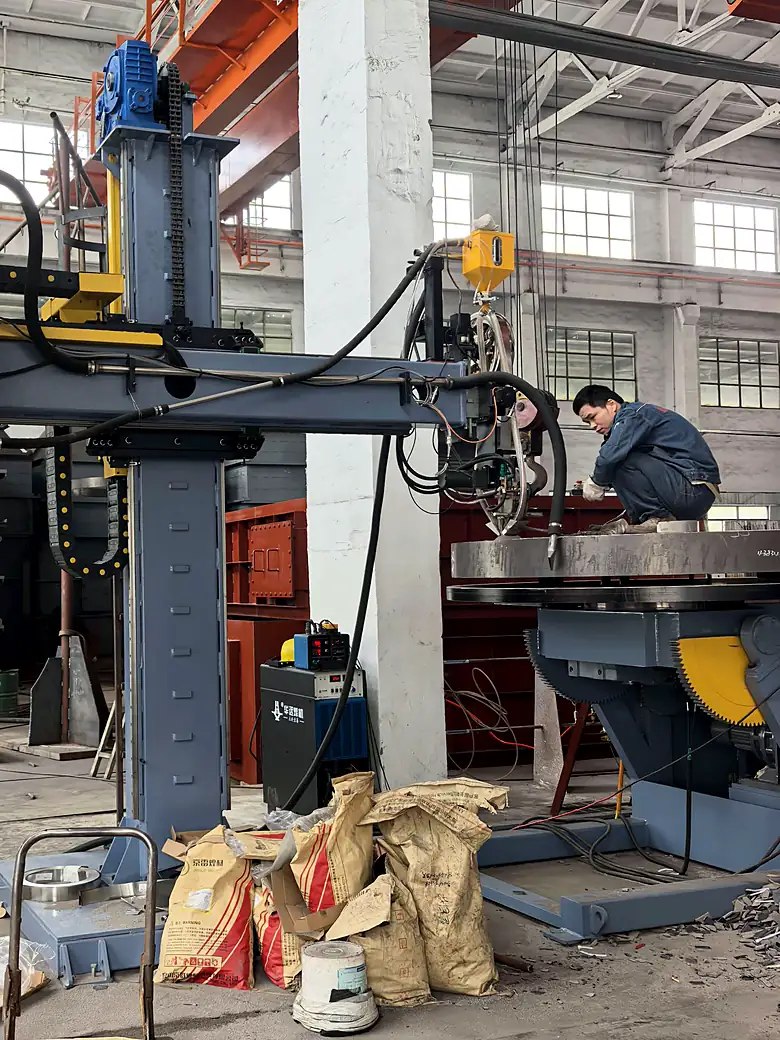
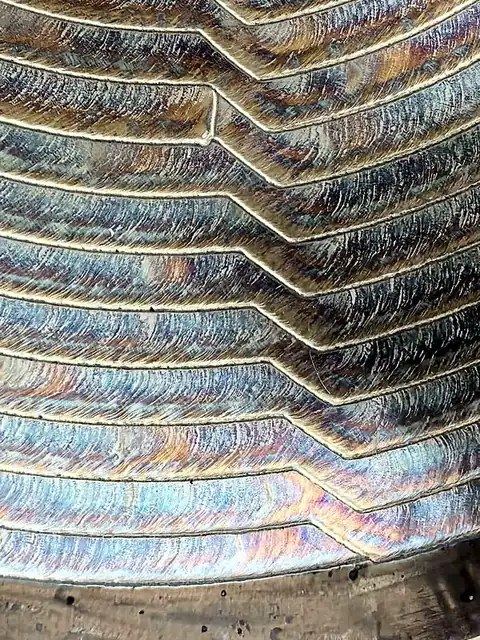
On-site photos: the strip cladding cell and finished overlay
Photos taken at Zhongyue’s production site. The finished overlay shows neatly arranged beads, even ripples and a flat surface.
Case summary
Strip cladding (submerged-arc strip cladding, also called strip overlay welding) uses a wide, thin strip electrode instead of wire to deposit a broad layer of corrosion-resistant alloy under a flux blanket. It is used mainly for large-area corrosion-resistant linings on tubesheets, heads and shell inner walls of petrochemical pressure vessels. Compared with wire cladding, the beads are wider and penetration is shallower, giving lower dilution, higher deposition per pass and fewer bead overlaps.
Customer: Wuxi Zhongyue Petrochemical Equipment Co., Ltd. — pressure vessels, heat exchangers and reactors for petrochemical and coal-chemical projects
Problem: wire cladding gave narrow beads, many overlaps and high dilution — slow on large areas, with NDT defect risk
Solution: haibao robot automated submerged-arc strip cladding cell for tubesheets and head inner surfaces
Result: neat, flat overlay with stable chemistry; fewer NDT repairs and less grinding and machining
Client
The customer: petrochemical equipment built for severe corrosion service
Zhongyue’s products serve petrochemical and coal-chemical projects with highly corrosive media. Overlays on tubesheets and head inner walls must meet mechanical, corrosion-resistance and NDT requirements at the same time. Missing any one means repair or scrap, so overlay consistency directly drives delivery schedules.
Wuxi Zhongyue Petrochemical Equipment Co., Ltd.
Wuxi, Jiangsu, China
PetrochemicalCoal chemicalPressure vesselsHeat exchangersReactors
Products
Pressure vessels, heat exchangers, reactors
Service
Petrochemical projects with severe corrosion
Quality
Strict mechanical, corrosion and NDT criteria for overlays
Equipment
Strip cladding automation cell (haibao robot)
The Bottleneck
Why is large-area corrosion-resistant cladding a long-standing pain point?
Tubesheets and head inner walls often need several square meters of continuous overlay. With wire cladding, narrow beads mean more passes and more overlaps — and every overlap is a potential defect.
ConventionalWire cladding
Narrow beads→Many overlaps→NDT repairs→Grind / machine
Narrow beads and frequent overlaps; low deposition efficiency
Higher base-metal dilution; overlay chemistry fluctuates
Defects tend to form at overlaps; higher NDT risk
Heavily dependent on senior welders; labor-intensive and slows delivery
This projecthaibao robot strip cladding cell
Wide beads→Few overlaps→Pass NDT
Wide strip electrode forms a broad bead in one pass; high deposition
Lower dilution; stable CRA layer chemistry
Fewer overlaps; porosity and slag inclusions under control, fewer RT/UT repairs
Automated cladding reduces reliance on senior welders; consistent quality
How It Works
Strip cladding vs. wire cladding: what’s the difference?
The key is the electrode shape. A strip is a wide, thin metal band; the arc moves across its width, spreading heat wider and shallower. The diagrams compare overlay cross-sections of the two processes.
* Schematic for illustration only; not to scale.
01
Lower dilution
Shallow penetration means less base metal mixes into the overlay, keeping the corrosion-resistant layer’s chemistry stable.
02
High deposition per pass
One wide bead covers the area of several wire passes, sharply raising large-area cladding productivity.
03
Fewer bead overlaps
Overlaps are where porosity and slag form. Fewer overlaps mean controllable defects, fewer RT/UT repairs and less grinding and machining.
Configuration
Cell overview
The workpiece rotates on a welding positioner while the manipulator boom positions the cladding head. Flux is laid ahead of the arc and recovered behind it, enabling continuous automated cladding of tubesheets and head inner surfaces.
| Equipment | Automated submerged-arc strip cladding cell |
|---|---|
| Process | Submerged-arc strip cladding (vs. conventional wire cladding) |
| Typical workpieces | Tubesheets, head inner surfaces |
| Application | Large-area corrosion-resistant lining / anti-corrosion overlay |
| Cell components | Welding manipulator + welding positioner + strip cladding head + flux feed and recovery |
| Quality control | Overlay mechanical, corrosion and RT/UT testing |
| Supplier | haibao robot |
* Strip width, power source, cladding consumables and number of layers are tailored to base metal and overlay requirements, and confirmed by technical agreement and procedure qualification.
Results
Results: what Zhongyue gained
01
Consistent overlay quality
Automated cladding: neat beads, even ripples, flat surface — independent of welder condition.
02
Much faster large-area cladding
High deposition and fewer passes finish full tubesheet and head surfaces sooner.
03
Lower NDT repair risk
Fewer overlaps keep porosity and slag under control, reducing RT/UT repairs.
04
Less grinding and machining
A flat overlay surface reduces downstream grinding and machining.
05
Less reliance on senior welders
The process is built into the equipment, easing the labor burden of large-area cladding.
06
Stronger corrosion-resistant vessel capability
Suited to batch and custom anti-corrosion cladding of tubesheets and heads.
Is It For You
Who should consider a strip cladding automation cell?
Petrochemical / coal-chemical vessel shops
Equipment for corrosive media with linings on tubesheets, heads or shells.
Large-area overlays
Full-surface CRA layers where wire cladding takes too many passes.
Strict testing
Overlays must meet mechanical, corrosion and RT/UT criteria.
Reliant on senior welders
Quality varies with staff; hiring is hard and the work is heavy.
FAQ
Strip cladding: frequently asked questions
What is strip cladding?
Strip cladding is an automated overlay welding process that uses a wide, thin strip electrode instead of wire. This project uses submerged-arc strip cladding, where welding takes place under a flux blanket. It forms wide beads in a single pass and is commonly used for large-area corrosion-resistant linings on tubesheets, heads and shell inner walls of petrochemical pressure vessels.
What is the difference between strip cladding and wire cladding?
Wire cladding produces narrow beads with deeper penetration, so covering the same area needs more passes and overlaps. Strip cladding produces wide beads with shallow penetration, giving lower dilution, higher deposition per pass and fewer overlaps. Strip cladding therefore suits large-area overlays; wire cladding suits small areas or complex local geometry.
Why does strip cladding have lower dilution?
The arc is distributed across the width of the strip, spreading heat input over a wider area. Penetration is shallower, so less base metal melts into the overlay. With low dilution, the overlay chemistry stays closer to that of the cladding consumable, and corrosion resistance is more stable.
Which workpieces suit strip cladding?
Flat or large-radius surfaces that need a large corrosion-resistant area, such as tubesheets, head inner surfaces and shell inner walls. In this project, Zhongyue mainly uses it for tubesheets and head inner surfaces.
Does strip cladding reduce NDT repairs?
Yes. Bead overlaps are where porosity and slag inclusions tend to occur. Strip cladding has fewer overlaps and stable bead formation, so defects are easier to control, helping reduce RT/UT repair rates.
Is extensive grinding or machining still needed after cladding?
Strip-clad surfaces are flat with even ripples, so downstream grinding and machining are noticeably reduced. Final machining allowance depends on the drawing and sealing-face requirements.
What information does haibao robot need for a proposal?
Please provide workpiece type and dimensions (tubesheet diameter, head size or shell ID), base metal and cladding consumable, overlay thickness and number of layers, applicable testing standards, and batch size and lead-time requirements. haibao robot will recommend a cell configuration and cladding procedure.
Why did Wuxi Zhongyue Petrochemical choose haibao robot?
Zhongyue needed to deliver compliant corrosion-resistant overlays for severe service consistently, while speeding up large-area cladding. haibao robot’s automated submerged-arc strip cladding cell forms wide beads in one pass, keeps overlay chemistry stable and defects controllable, and reduces dependence on senior welders.
Related delivery cases
VESSELS · CUTTINGRobotic head hole-cutting cell for Jiangsu Qianli MachineryHead openings, saddle cuts and plate cutting in one cell → VESSELS · WELDINGHalf-pipe jacket automatic welding station for Shandong ZhongfuTwin-torch symmetrical welding (in Chinese) → VESSELS · FORMINGAutomatic half-pipe forming machine for Anhui Saide QiruiUncoil — form — spiral wrap in one line (in Chinese) →
Contact · Get a Proposal
Your tubesheet and head overlays,
clad automatically.
Send us your workpiece drawings and cladding requirements, and haibao robot will recommend a strip cladding cell configuration and procedure. You are also welcome to visit haibao robot in Changzhou, China, to see the equipment in operation.
Workpiece type & sizeBase metal / consumableOverlay thickness & layersTesting standardBatch & lead time
Key Account Project Director · International Welding Engineer (IWE)
Shao Yicheng
Emailmasterhyper@163.com
Hotline+86 519 8837 0688
AddressNo. 129 Yingbin Branch Road, Henglin, Wujin District, Changzhou, Jiangsu, China
haibao robot Welding & Cutting Co., Ltd. | Strip cladding cells · Submerged-arc strip cladding · Tubesheet cladding · Head inner-wall overlay · Pressure vessel welding & cutting equipment | Published.