News
3D Laser Trimming for Automotive Sheet Metal Parts | haibao robot
Application and equipment images
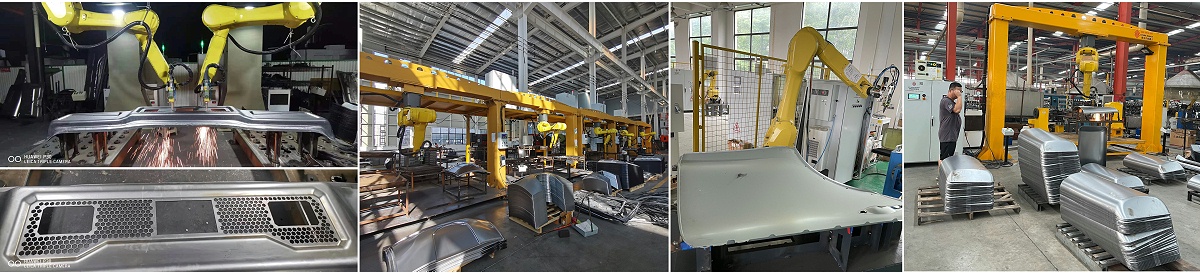
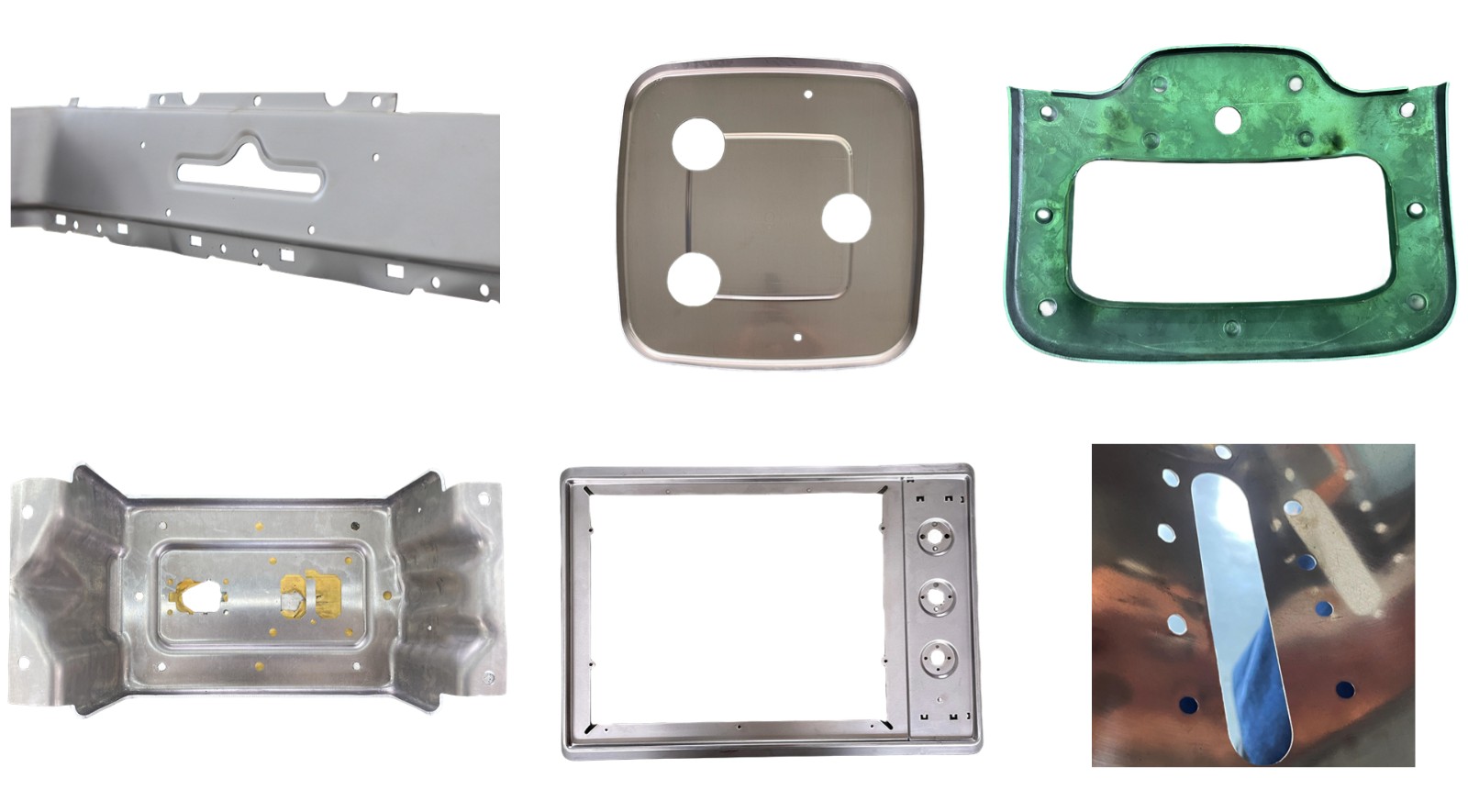
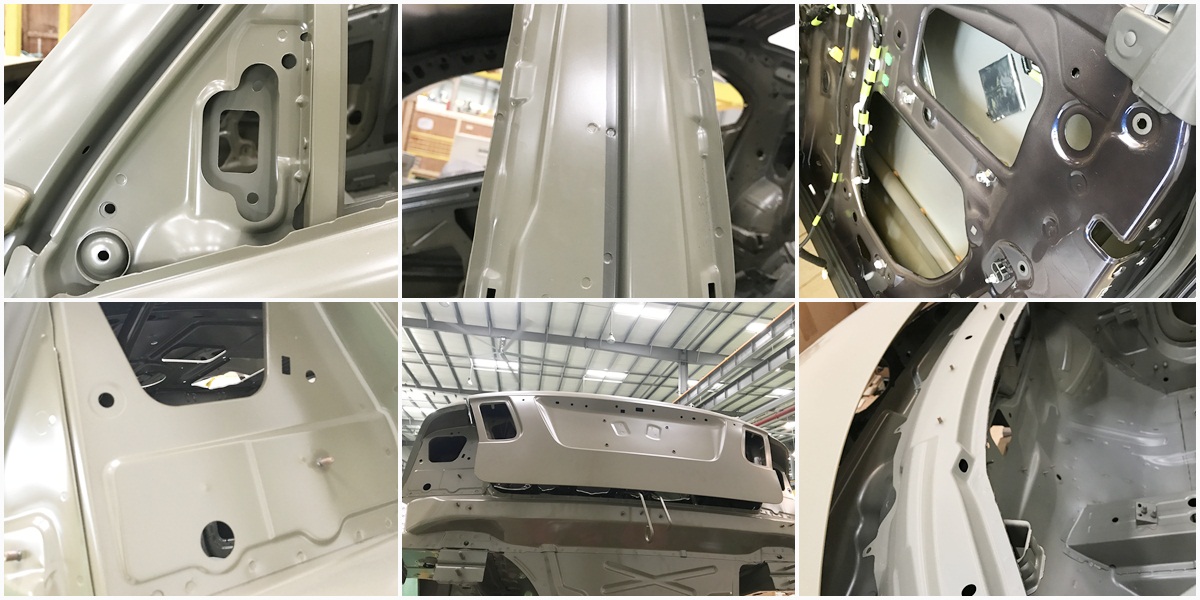
Authorized application reference images. Equipment configuration and performance must be confirmed for the intended workpiece.
The production problem
Formed vehicle panels often need trimming, holes and access openings after pressing. A full sequence of dedicated dies can be efficient for a stable high-volume part, but new variants introduce tooling work and changeover requirements. Three-dimensional laser trimming is an alternative worth evaluating for prototypes and mixed production.
Separate forming from final trimming
The reference process first forms the blank, then locates it in a fixture for robotic laser cutting. A three-dimensional part model defines the contour and hole paths. This does not remove the need for forming tooling; it changes how selected downstream trimming and piercing operations are performed.
Applications and configuration
The source examples cover vehicle body panels, bumper-related components, steps and cab parts. Robot mounting, external travel, rotary tables and extraction should be selected around the component envelope. Carbon steel, stainless steel and aluminum each need their own qualified cutting settings.
Validate production readiness
Check trim-line position, hole size, burr level, heat effects and part distortion on representative formed components. Include loading and inspection in cycle-time comparisons. haibao robot can review the part family, target output and available floor space to define the required cell scope.
Discuss your application with haibao robot
Send a 3D model or dimensioned drawing, material specification, production volume and acceptance criteria. Ask for a configuration review and a sample-cutting plan before finalizing the machine scope.
Email masterhyper@163.com | WhatsApp +86 177 5158 3908
Explore Robotic 3D Fiber Laser Cutting Machine for Formed Metal Parts
RELATED NEWS
- 3D Laser Cutting for Fitness Equipment Frames | haibao robot 2026-11-01
- Automated 3D Laser Trimming for Hot-Stamped Steel | haibao robot 2026-11-01
- Laser Trimming and Hole Cutting for Bent Tubes | haibao robot 2026-11-01
- Large-Format 3D Laser Cutting for Long Metal Parts | haibao robot 2026-11-01
- 3D Laser Cutting for Hydroformed Automotive Tubes | haibao robot 2026-11-01
Categories
Latest News
Contact Us
Contact: Mr.Shao
Phone: 0086-17751583908
E-mail: 691043690@qq.com
Whatsapp:86-17751583908
Add: shanghai, China TianHe District, GuangZhou Num 899